Latest Updates :
    Showing posts with label Research. Show all posts
    Showing posts with label Research. Show all posts

    Agriculture scientists urged to produce High quality mangoes nurseries

    Additional Secretary Agriculture (Planning), Ahmad Ali Zafar has urged upon the agricultural scientists to introduce high quality mango varieties to attract the US and European markets. Talking to newsmen after the visit of Mango Research Station Shujabad here on Sunday, Ahmad Ali Zafar said there was no alternate of Pakistani mango type 'Chaunsa' and Anwar Ratole across the world. He directed the agri scientists to produce nurseries of high quality mangoes and provide them to growers at cheapest rates. Agriculture scientists urged to produce High quality mangoes nurseries: agrinfobank.comHe said that agricultural scientists should introduce the disease resistant varieties. He said $30 million revenue was obtained by exporting mango to the US, European markets this year and it could be increased by producing high quality mangoes through better management of mango gardens.
    Earlier, talking to the training participants organised under agriculture sector linkages programme Ali Zafar stressed the participants to create awareness among mango growers regarding better management of mango for boosting mango yield.
    Khalid Mehmood said Multan, Muzaffargarh, Khangarh, Shujabad and Rahimyar Khan districts contribute 63 percent share from total mango gardens of Punjab. He said training was being imparted to agricultural officers (extension) for stepwise management of mango gardens.
    News Source; Business Recorder   News Collectd: agrinfobank.com Team

    Honey bees can be trained to detect cancer "in ten minutes

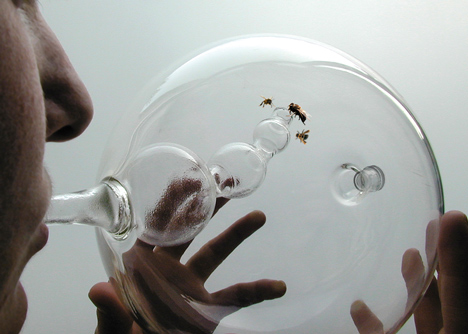
    Portuguese designer Susana Soares has developed a device for detecting cancer and other serious diseases using trained bees
    Dezeen_Susana_Soares_Bees_Design_2
    The bees are placed in a glass chamber into which the patient exhales; the bees fly into a smaller secondary chamber if they detect cancer.
    "Trained bees only rush into the smaller chamber if they can detect the odour on the patient's breath that they have been trained to target," explained Soares, who presented her Bee's project at Dutch Design Week in Eindhoven last month.
    Dezeen_Susana_Soares_Bees_Design_1SQ
    Scientists have found that honey bees - Apis mellifera - have an extraordinary sense of smell that is more acute than that of a sniffer dog and can detect airborne molecules in the parts-per-trillion range.
    Bees can be trained to detect specific chemical odours, including the biomarkers associated with diseases such as tuberculosis, lung, skin and pancreatic cancer.
    Bees have also been trained to detect explosives and a company called Insectinel is training "sniffer bees" to work in counter-terrorist operations.
    Dezeen_Susana_Soares_Bees_Design_3
    "The bees can be trained within 10 minutes," explains Soares. "Training simply consists of exposing the bees to a specific odour and then feeding them with a solution of water and sugar, therefore they associate that odour with a food reward."
    Once trained, the bees will remember the odour for their entire lives, provided they are always rewarded with sugar. Bees live for six weeks on average.
    "There's plenty of interest in the project especially from charities and further applications as a cost effective early detection of illness, specifically in developing countries," Soares said.
    Dezeen_Susana_Soares_Bees_Design_4
    Here is a project description by Susana Soares:


    Bee's / Project
    Bee's explores how we might co-habit with natural biological systems and use their potential to increase our perceptive abilities.
    The objects facilitate bees' odour detection abilities in human breath. Bees can be trained within 10 minutes using Pavlov’s reflex to target a wide range of natural and man-made chemicals and odours, including the biomarkers associated with certain diseases.
    The aim of the project is to develop upon current technological research by using design to translate the outcome into systems and objects that people can understand and use, engendering significant adjustments in their lives and mind set.
    How it works
    The glass objects have two enclosures: a smaller chamber that serves as the diagnosis space and a bigger chamber where previously trained bees are kept for the short period of time necessary for them to detect general health. People exhale into the smaller chamber and the bees rush into it if they detect on the breath the odour that they where trained to target.
    What can bees detect?
    Scientific research demonstrated that bees can diagnose accurately at an early stage a vast variety of diseases, such as: tuberculosis, lung and skin cancer, and diabetes.
    Precise object
    The outer curved tube helps bees avoid from flying accidentally into the interior diagnosis chamber, making for a more precise result. The tubes connected to the small chamber create condensation, so that exhalation is visible.
    Detecting chemicals in the axilla
    Apocrine glands are known to contain pheromones that retain information about a person's health that bees antennae can identify.
    The bee clinic
    These diagnostic tools would be part of system that uses bees as a biosensor.
    The systems implies:
    - A bee centre: a structure that facilitates the technologic potential of bees. Within the centre is a beefarm, a training centre, a research lab and a healthcae centre.
    - Training centre: courses can be taken on beetraining where bees are collected and trained by beetrainers. These are specialists that learn beetraining techniques to be used in a large scope of applications, including diagnosing diseases.
    - BEE clinic: bees are used at the clinic for screening tests. These insects are very accurate in early medical diagnosis through detection on a person's breath. Bees are a sustainable and valuable resource. After performing the diagnose in the clinic they are released, returning to their beehive.
    Bee training
    Bees can be easily trained using Pavlov’s reflex to target a wide range of natural and man-made chemicals odours including the biomarkers associated with certain diseases. The training consists in baffling the bees with a specific odour and feeding them with a solution of water and sugar, therefore they associate that odour with a food reward.

    Technology Breakthrough: Enables Crops To Take Nitrogen From The Air

    A potentially “world-changing” technology has been developed by researchers at the University of Nottingham — a means of enabling any type of crop to take nitrogen from the air. In other words, an effective means of phasing out expensive and environmentally damaging nitrogen fertilizers.
    As it stands now, most crops are dependent upon nitrogen fertilizers, as they are unable to “fix” their own nitrogen from the air, as some plants/crops do (legumes mostly). Legumes possess the ability to fix nitrogen from the atmosphere thanks to the nitrogen fixing bacteria that live within them. So if plants that are able to fix their own nitrogen possess that ability as a result of bacteria, what’s stopping the development of techniques/bacteria to provide that ability to other crops? That’s the question that the researchers have now provided an answer to: Not much.crops nitrogen fixing technology developed
    The University of Nottingham writes:
    Nitrogen fixation, the process by which nitrogen is converted to ammonia, is vital for plants to survive and grow. However, only a very small number of plants, most notably legumes (such as peas, beans and lentils) have the ability to fix their own nitrogen from the air. The vast majority of plants have to obtain nitrogen from the soil, and for most crops currently being grown across the world, this also means a reliance on synthetic nitrogen fertilizer.
    Professor Edward Cocking, Director of The University of Nottingham’s Centre for Crop Nitrogen Fixation, has developed a unique method of putting nitrogen-fixing bacteria into the cells of plant roots. His major breakthrough came when he found a specific strain of nitrogen-fixing bacteria in sugar-cane which he discovered could intracellularly colonize all major crop plants. This ground-breaking development potentially provides every cell in the plant with the ability to fix atmospheric nitrogen. The implications for agriculture are enormous as this new technology can provide much of the plant’s nitrogen needs.
    A leading world expert in nitrogen and plant science, Professor Cocking has long recognized that there is a critical need to reduce nitrogen pollution caused by nitrogen-based fertilizers. Nitrate pollution is a major problem, as is also the pollution of the atmosphere by ammonia and oxides of nitrogen. In addition, nitrate pollution is a health hazard and also causes oxygen-depleted “dead zones” in our waterways and oceans. A recent study estimates that that the annual cost of damage caused by nitrogen pollution across Europe is £60 billion — £280 billion a year.
    With regard to the new technology — which has been dubbed ‘N-Fix’ — Professor Cocking had this to say: “Helping plants to naturally obtain the nitrogen they need is a key aspect of World Food Security. The world needs to unhook itself from its ever increasing reliance on synthetic nitrogen fertilizers produced from fossil fuels with its high economic costs, its pollution of the environment and its high energy costs.”
    To explain further, N-Fix doesn’t involve any genetic modification or bio-engineering, it’s simply a naturally occurring nitrogen-fixing bacteria that, when applied to the cells of plants (intra-cellular), via the seeds, provides every one of the plant’s cells with the ability to fix nitrogen. All that needs to be done is to coat the seeds with the bacteria.
    According to the researchers, the technology works with any type of crop. And apparently there is quite a lot of field experience to back that assertion up. Over the past 10 years, “the University of Nottingham has conducted a series of extensive research programs which have established proof of principal of the technology in the laboratory, growth rooms and glasshouses.”
    “The proof of concept has already been demonstrated. The uptake and fixation of nitrogen in a range of crop species has been proven to work in the laboratory and Azotic Technologies Ltd is now working on field trials in order to produce robust efficacy data. This will be followed by seeking regulatory approval for N-Fix initially in the UK, Europe, USA, Canada and Brazil, with more countries to follow.”
    Current estimates are that the N-Fix technology will be made commercially available sometime within the next few years
    Source: http://cleantechnica.com


    Research decline undermining agriculture

    Kadambot Siddique
    Sustainability in Australian Farming Systems was first published by Future Directions International.
    One of the primary challenges facing the Australian agricultural industry is input cost.
    Australia is facing a lot of competition from low cost producing emerging countries.
    There is a great deal of agricultural production happening in Brazil and in parts of the former Soviet Union. Brazil is competing with us in the beef market, Kazakhstan and Uzbekistan in wheat, and then of course, New Zealand (not a low-cost country) is always competing with us on fruits, vegetables, dairy products and meat.
    The cost of production in Australia has increased and is still increasing. That is the biggest issue. Added to this, the terms of trade and productivity trend are declining.
    The next challenge is the inherent variability (frequent droughts, poor soil fertility etc.) in our environment and this is exacerbated by climate change.We had 10 years of drought in Western Australia and are even now going through drought. That is a very big threat for us; it has always been there, but the frequency of such event has increased in recent years.Research decline undermining agriculture
    So we have profitability and competition issues, environmental issues and climate change, and I think we have issues with regards to new generation farmers, researchers and extension specialists coming into agriculture. I'm not too pessimistic - but we need to look at succession planning. Profitability needs to be demonstrated, because if there is no profitability, young people certainly won't take up farming.
    Another thing we need to do is to become faster at adopting technologies. Technology is developing at a rapid rate and we need a younger generation in farming to encourage its uptake.
    There is GIS, GPS, variable rate technology, GM crops and information technology, all of those things. While technologies have been developing quickly, I think that overall research and development and investment have declined during the last 10 to 15 years.
    The investment in agricultural research in Australia has been static or declining since the mid- 1980s and as a result the research intensity has been declining. Realistically in agriculture, it takes a technology about ten to twenty years to be developed and adopted. So decline in R&D spending will have serious impacts in the coming years.
    The extension services in Australia (especially public agencies) are also disorganised and declining.
    The focus of the agricultural departments has changed, but I believe that the governments still have a role to play. Increasing private investment is also necessary and farmers contribute a great deal to that through research and development corporations.
    The combination of falling profitability, competition, environmental challenges and insufficient research and development are serious issues that threaten the long term sustainability of the Australian agricultural sector.
    Australia needs to take a much more integrated approach to the management and branding of the agriculture industry.
    There is a whole lot of division within the industry and we need a united approach in all aspects of agriculture. We should, for example, really be joining forces with New Zealand to create an Australia-New Zealand branded dairy industry.
    New Zealand has had more success launching their brand on the international market. In dairy, nearly 70 per cent of world trade is dominated by New Zealand - a very small country. Demand from Asia is growing and so far we have not taken a sufficiently proactive approach to capitalising on that demand. We need to target more, particularly to the wealthy part of the market.
    There are challenges in this area, but there are opportunities as well. By focusing on markets, selling our brand and moving beyond lip-service to identifying and communicating our selling points we can retain a competitive advantage in the global market.
    We've got the land, the environment and our products are clean, green and safe. To support this we need a much tougher regime to ensure food safety and quality; that is of prime importance. If our products are guaranteed food safe; then the higher end of the market will buy.
    It is also necessary to educate our urban population about the importance of farmers and the food production sector. People don't understand how lucky we are to get the products that we do - fresh fruits, fresh vegetables, grains, diary and meat etc.
    We need more education in schools about the importance of agriculture and food production systems. Agriculture in Australia has got a future but it has got a lot of challenges.
    Australia is not going to be a big player in the global market but it has got a good position in the market place especially the higher end of the market. By building the Australian brand name and improving product integration we can translate more of a return to the growers and all involved in the industry.
    Foreign investment in agriculture is also important. Capital injection is absolutely essential in agriculture. The Northern agricultural arc needs to be looked at for development.
    This area needs emphasis so that we can diversify production and produce a broader range of products from than what is produced in southern Australia. In the north we need to look at developing pockets and corridors for farming rather than widespread broad-acre farms.
    The focus should be on areas of intensive production that use water efficiently and minimise environmental impact. Land capability studies are required to identify optimum areas for water and port access. Then we can develop intensive production systems lined up with markets.
    Professor Kadambot Siddique is the Hackett Professor of Agriculture Chair at the University of Western Australia and is the Director of The UWA Institute of Agriculture. He is an internationally recognised leader in crop science and agriculture and has been instrumental in the establishment of the Western Australian pulse industry. He has also worked on the development and management of agricultural projects in Southern Asia, the Middle East, North America and Europe. In 2013, Professor Siddique was nominated as a WA finalist for the Australian of the Year Award for his contribution to agricultural science. He was also involved in organising UWA's '2050 Food' Lecture Series in 2013 that examined issues surrounding Australian and global food security and production.


    Seaweed: A new option for immune stimulation

    Animal producers of today are concerned with vaccination. It is an essential technique for the protection of the livestock health which, however, entails significant costs for stock breeders. Maximising the efficiency and effectiveness of prophylactic 
vaccination strategies is therefore a major stake.

    Seaweed: A new option for immune 
stimulation

    Dr H. Demais at BioVet Conseil, Dr P. Nyvall Collen and Amadéite technical team, Amadéite, France
    To achieve high efficiency, new avenues are constantly explored. One of them concerns the use of new molecules extracted from seaweeds to stimulate the natural defences of the body and its response to vaccination strategies. 
There are two types of immunity on which body’s response to the aggression of a pathogen is based: innate immune response and adaptive response ( Figure 1 ).
    Innate immunity

    The innate response is the first line of defence against pathogens. It is 
activated immediately and acts very quickly. This immune response can be found in all animals. It will be the same whenever the body encounters that pathogen. However, the body does not retain a memory of the infectious agent. The mechanism of this type of immunity consists in recognising the molecular patterns shared by numerous pathogens, which are essentially represented by membrane fractions (glycocalyx).
    The various elements that contribute to the innate immune response are the following:
    •Physical barrier (mucous membrane, skin, mucus, villi etc)

    •Phagocytic cells, such as the macrophages
    • Natural killer (NK) cells, i.e. large granular lymphocytes
    • Certain cytokines, which deliver signals warning the body of a danger
    • Complement system

    •Toll-Like Receptors (TLR), a family of membrane receptors only recently discovered. They control the expression of molecules that fight against infectious agents (directly or indirectly, via effector cells, and by recruiting the activation of the adaptive immune system).
    The elements associated with the innate immune response can act on the pathogen directly or indirectly, by producing effector cells (cytokines etc). The latter will subsequently trigger the adaptive immunity by activating the T and B cells, which are small lymphocytes.
    Adaptive immunity


    Unlike the innate response, the Acquired or Adaptive response occurs in vertebrates only. During the first encounter with a given pathogen (primary infection), it acts as the body’s second line of defence. Its activation takes then some time – known as latency takes some time. 
However, this response system memorises the pathogens it encounters and when the body is again exposed to them the latency is much shorter and the immune system reacts to the aggression almost immediately. Adaptive immunity is specific: it recognises the molecular patterns of the already encountered pathogens.
    There are various elements that contribute to the adaptive immune response:
    • T cells
    • B cells
    • Antibodies
    • Immunoglobulin (Ig), T cell receptor (TCR), Cytotoxic T cell (CTL), antibody (AB) producing plasma cells + coupled aid of the innate immunity effectors
    A new source of active elements


    In recent years the relevance of seaweeds in numerous biological applications was brought to the forefront,
particularly to immune mechanisms, taking special interest sulfated polysaccharides. These are complex carbohydrates which do not occur in terrestrial plants. They are supposed to influence the immune system by a vast number inadequately understood pathways.
    Sulfated polysaccharides
    Polysaccharides represent a structurally diverse class of macromolecules which are relatively widespread in nature. There are simple and complex forms of polysachharides.
    Unlike proteins and nucleic acids, polysaccharides contain repetitive structural features which are chains of monosaccharide residues joined together by glycosidic bonds.
    They form polymer (-type) structures represented in the form of chains that may be homogenous (homopolysaccharides) or not (heteropolysaccharides). The simple forms are the homopolysaccharides composed of a single type of sugar, linked in an essentially linear manner (starch, 
glycogen, cellulose etc).
    They are structural compounds or mechanisms of energy storage in an easily releasable form. Their structure may become more complex owing to their capacity of establishing links at various levels of each elementary unit, allowing thus the development of branching structures in the three dimensions. Figure 2 illustrates the branched heteropolysaccharides.
    Structural variability


    The nucleotides in nucleic acids and the amino acids in proteins can interconnect in only one way, while the monosaccharide units in oligosaccharides and polysaccharides can interconnect at several points to form a wide variety of linear or branched structures.
    For instance, the number of possible permutations for four different sugar monomers can attain up to 35,560 unique tetrasaccharides, while four amino acids can form only 24 different permutations.
    This explains the fact that, among macromolecules, polysaccharides provide the highest capacity for carrying biological information, as they have the greatest potential for structural variability. In addition, one of the attributes that numerous marine polysaccharides possess is their polyanionic character, which confers them a high chemical reactivity.
    Of these anionic polysaccharides, the majority of those which occur in seaweed are sulfated polysaccharides: galactan (agar, carrageenan), ulvans and fucans.
    The ulvans, the water-soluble polysaccharides found in green seaweed of the order Ulvales (Ulva and Enteromorpha), have sulfate, rhamnose, xylose, iduronic and glucuronic acids as their main constituents. Ulvan structure shows great complexity and variability as evidenced by the numerous oligosaccharide repeating structural patterns identified. The main repeating disaccharide units reported are of ulvanobiouronic acid 3-sulfate type, containing either glucuronic or iduronic acid. In addition, a few repeating patterns can be found that contain sulfated xylose replacing uronic acid or glucuronic acid on the O2 binding/link of  the rhamnose-3-sulfate units.
    Interests
    This huge variability in the polysaccharide structure provides the flexibility required for exact regulatory mechanisms in different cell-cell interactions in higher organisms.
    Sulfation in particular seems to be conducive to various biological activities noted in polysaccharides extracted from seaweed.
    Marine sulfated polysaccharides: Role and effect on immunity
    Sulfated polysaccharides, which are widespread in seaweed, have been observed to possess anti-infectious (anti-viral, anti-bacterial, anti-tumoral), antioxidant and anti-thrombotic activities. 
They also act as immune modulating, stimulating the immune response or in controlling the activity of immune cells in order to mitigate negative effects such as inflammation. One of the pathways of marine sulfated polysaccharides, which has been emphasised recently, is their role in the activation of TLR.
    Studies are demonstrating that marine algal polysaccharides can influence the innate immune response by binding to recognition receptors called PRR (Pattern Recognition Receptors), such as the mannose receptors or TLRs of phagocytic cells, especially macrophages. TLRs are transmembrane proteins which detect invading pathogens by binding to ancestral molecules of microbial origin called Pathogen-Associated Molecular Patterns (PAMPs).
    The PAMPs contact at TLR level triggers a cascade of responses resulting in the expression of inflammatory response genes. In mammals, these recently identified receptors are numbered from 1 to 11 (TLR1-TLR11). On contact with their respective PAMPs, TLRs specifically activate a signaling pathway consequently NF-kB 
(Nuclear Factor-kappa B) and AP1 (ActivatorProtein 1) transcription factors regulating the expression of inflammatory cytokines such as TNFα, IL-1 or IL-6.
    It appears that TLR plays a key role in the adaptive immune response, however the signals also lead to the activation of numerous other cells and functions of the immune system, which makes them essential both for the innate immune mechanisms and for adaptive immunity.
    The activity of some sulfated algal polysaccharides as TLR activating agents might be the result of a certain structural similarity between these marine polysaccharides and bacterial lipopolysaccharides (LPS). Bacterial LPS are a type of structure occurring at the surface of their external membrane and recognised as bacteria-specific elements. Bacterial LPS in mammals are shown to be specifically recognised by TLR4.
    Applications in animal health
    Seaweeds appear to contain sugars in the form of polysaccharides, some of which – sulfated polysaccharides – are complex polyanionic structures which possess various biological properties. A vast number of studies have already evidenced the effects of some of these sulfated polysaccharides, particularly the fucoidans, the carrageenan and the ulvans, on certain mechanisms of inflammatory response and on 
immunity.
    The identification and selection of these polysaccharides extracted from suitable seaweeds makes it possible to envisage the use of these molecules as agents for the stimulation of the various mechanisms associated with the body defence and, in particular, of the innate immunity mechanisms.
    Within the framework of the potential applications in the fields of animal breeding and animal health, two non-exclusive strategies can be proposed:
    1) Regular sequential intakes for a general stimulation of the body’s state of defence:
    With a regular intake not connected with vaccination, they allow the body strengthening its defence. Repeated use stimulates ‘basic’ immune system and the boosts the defence condition of the innate system. The use of polysaccharides upstream or downstram of a prophylactic programme may be an asset in enhancing the level of immune protection of an individual or group of livestock and in contributing to a better control of the infectious pressure on the livestock. This prevents the appearance of recurrent infectious pathologies.
    2) Targeted intakes within the framework of a vaccination programme:
    This can enhance the the intake and persistence of the vaccine and also improve the technical and economic performance of vaccine prophylactic programmes.
    Further inquiry can be addressed at: contact@amadeite.com
    AAF Volume 21, Issue 5

    Source: http://www.allaboutfeed.net

     
    Support : agrinfobank.com | Oasis Agro Industries Pakistan
    Copyright © 2012. Agriculture Information Bank - All Rights Reserved
    Template Created by agrinfobank.com Team Published by agrinfobank Blog Team
    Proudly powered by Blogger