Growing vegetables hydroponically leads to a more expensive, but tastier veggie, cumberlink.com reports.

Original source:
http://www.cumberlink.com/articles/2005/08/07/business/busi01.txt


Growing vegetables hydroponically leads to a more expensive, but tastier veggie, cumberlink.com reports.
Original source:
http://www.cumberlink.com/articles/2005/08/07/business/busi01.txt
by Mike Adams
Hydroponics, the practice of growing plants in water instead of soil, received a giant lift from a New Delhi family that created a purely organic nutrient mix that has sustained tomatoes and Arjun.
Original source:
http://www.business-standard.com/common/storypage.php?storyflag=y&leftnm=lmnu5&leftindx=5&lselect=2&chklogin=N&autono=202585


Source: Article taken from Natural News, only for information purpose
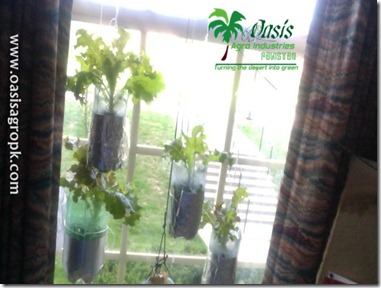 Countries, which were world leaders in hydroponics employ what was called a 'cluster approach where land is allocated just for hydroponic farming practiced by different farmers. To develop a viable hydroponics industry, Pakistan desperately needs to improve its infrastructure facilities, such as availability of electricity and land. Greenhouses need a constant supply of power but the situation in Pakistan is not encouraging, they added. Agriculture scientists said there are two main types of hydroponics culture, namely solution culture and medium culture. The solution culture excludes roots as source of nutrition, while the medium culture is based on roots as part of the process. The solution culture method is further divided into three types - static solution culture, continuous flow solution culture, and aeroponics. The medium culture, on the other hand, is based on medium through which the root is routed - sand culture, gravel culture or rock wool culture. These media of nutrition are again sub-divided into two categories - sub-irrigation and top irrigation. In all these techniques, mostly plastic is used for hydroponic reservoirs, though other materials have also been used, which include concrete, glass, metal, vegetable solids and wood. Experts advised that the containers should block light to prevent algae growth in the nutrient solution. Hydroponics is a method of growing plants, using mineral nutrient solutions without soil. Terrestrial plants may be grown with their roots in the mineral nutrient solution only or in an inert medium, such as perlite, gravel, or mineral wool. This technology was discovered in the 19th century. In this technology plants absorb essential mineral nutrients as inorganic ions in water. In natural conditions, soil acts as a mineral nutrient reservoir, but the soil itself is not essential to plant growth. Hydroponics is also a standard technique in biology research and teaching. Researchers have obtained groundbreaking results in various countries, however the process has proved it to be thoroughly practical, having an edge over conventional methods of horticulture. Talking about the benefits of the technology, the officials said it saves water, freedom from soil diseases and weeds and less labour needed and cost effective. Scientists agreed that hydroponics fruits and vegetables are sweeter and more luscious than those grown in ordinary soil are. The technology is being utilised around the globe, including the US, European Union (EU) and African countries. Repeated pricing studies have shown that only high-quality garden type vegetables like tomato, cucumber, potato, sweet peppers, melon, and specialty lettuce can cover costs or give a return in hydroponics systems. As the consumer becomes increasingly aware of quality differences, especially the high quality of tomatoes, cucumbers, and leafy vegetables coming from hydroponics, the demand will increase. This, along with the increased emphasis on eating more vegetables for dietary and health reasons, will surely help the hydroponics industry.

