


| Nutrient | Functions |
| Nitrogen (N) | Synthesis of proteins (growth and yield). |
| Phosphorus (P) | Cellular division and formation of energetic structures. |
| Potassium (K) | Transport of sugars, stomata control, cofactor of many enzymes, reduces susceptibility to plant diseases. |
| Calcium (Ca) | A major building block in cell walls, and reduces susceptibility to diseases. |
| Sulphur (S) | Synthesis of essential amino acids cystin and methionine. |
| Magnesium (Mg) | Central part of chlorophyll molecule. |
| Iron (Fe) | Chlorophyll synthesis. |
| Manganese (Mn) | Necessary in the photosynthesis process. |
| Boron (B) | Formation of cell wall. Germination and elongation of pollen tube. |
| Zinc (Zn) | Auxins synthesis. |
| Copper (Cu) | Influences in the metabolism of nitrogen and carbohydrates. |
| Molybdenum (Mo) | Component of nitrate-reductase and nitrogenase enzymes. |
Showing posts with label Nutrition guide. Show all posts
Showing posts with label Nutrition guide. Show all posts
Main functions of plant nutrients
Nutrient Management for Sunflower Production
Fertilizer management is an important part for sunflower production and one must know how input affects the crop and soil traits. Determination of optimum fertilizer rates is important because of increasing economic and environmental concerns. This study was therefore conducted to determine optimum fertilizer and manure requirement for sunflower production. In this regard, three field experiments were conducted at Students Farm, Sindh Agriculture University, Tandojam, Pakistan, located at 25o25’60’N 68o31’ 60E, altitude 19.5 m asl. In all the experiments sunflower variety HO-1 was sown in rows (75 cm spacing). The experiment-1, was meant to evaluate NPK, Zn and B requirements for sunflower production. The treatments consisted: Factor-A=Seasons (Spring and Autumn), Factor-B NPK Levels (0-0-0 NPK kg ha-1, 60-30-30 NPK kg ha-1 (N as broadcast), 90-45-45 NPK kg ha-1 (N as broadcast), 120-60-60 NPK kg ha-1 kg ha-1 (N as broadcast), 60-30-30 NPK kg ha-1 (N as fertigation), 90-45-45 NPK kg ha-1 (N as fertigation) and 120-60-60 NPK kg ha-1 (N as fertigation) and Factor-C (zinc and boron levels (0-0, 10.0-1.5, 10.0-2.0, 15.0-1.5, 15.0.2.0, 20.0-1.5 and 20.0-2.0 Zn+B kg ha-1). The results recorded taller plants (207.2 cm), maximum stem girth (12.2 cm), better head diameter (23.0 cm), more seeds head-1 (696.4), heavier seeds weight head-1 (49.0 g), bolder seed index (71.2 g), maximum seed yield (2743.0 kg ha-1) and higher dry matter (11666.7 kg ha-1), higher N-uptake (70.2 kg ha-1), P-uptake (19.1 kg ha-1), K-uptake (93.9 kg ha-1), Zn-uptake (335.8 g ha-1) and B-uptake (199.2 g ha-1) under application of 90-45- 45 NPK x 15-1.5 Zn-B kg ha-1 (N applied as fertigation). Similarly, higher values of physiological traits at flowering phase i.e dry matter (1353.0 g m-2), leaf area index (5.7), leaf area duration (55.6 days), crop growth rate (8.7 g m-2 day-1) and net assimilation rate (24.3 g m-2 day-1) were also noted for the same treatement.
 However, oil content in this Interactive effect showed non-significant differences. The regression coefficient (b) revealed that a unit increase in various traits resulted in corresponding increase of sunflower seed yield by head diameter (101.2 kg ha-1) seeds head-1 (6.2 kg ha-1), seed weight head-1 (55.2 kg ha-1), seed index (58.2 kg ha-1), dry matter (0.3 kg ha-1), leaf area index (1108.3 kg ha-1), leaf area duration (113.4 kg ha-1), crop growth rate (378.4 kg ha-1), net assimilation rate (213.7 kg ha-1), nitrogen uptake (27.4 kg ha-1), phosphorus uptake (131.8 kg ha-1), potassium uptake (32.4 kg ha-1), zinc uptake (6.5 kg ha-1) and boron uptake (10.9 kg ha-1). However, a unit increase in seed oil content resulted corresponding decrease in seed yield by 1339.2 kg ha-1. The experiment-2, involved “Integrated use of organic manures and inorganic fertilizers nutrients for sunflower production” The treatments consisted: no manure, cattle manure (5, 10 and 15 tons ha-1) and poultry manure (5, 10 and 15 tons ha-1) with 90-45- 45 NPK + 15 Zn + 1.5 B (kg ha-1). The results of the study showed that the incorporation of fertilizers and manures significantly enhanced all the crop parameters. The taller plants (232.3, 231.2 cm), more stem girth (13.9, 13.9 cm), maximum head diameter (27.1 and 26.5 cm), higher number of seeds head-1 (801.9 and 797.9), heavier seed weight head-1 (66.6 and 65.9 g) bolder seed index (83.2 and 83.0), superior seed yield (3681.8 and 3643.2 kg ha-1) and higher dry matter at harvest (12859.3 and 12845.0 kg ha-1), higher Nuptake (80.7 and 82.2 kg ha-1), P-uptake (24.2 and 24.5 kg ha-1), K-uptake (114.2 and 114.0 kg ha-1), Zn-uptake (531.9 and 530.4 g ha-1) and B-uptake (320.4 and 314.9 g ha-1), higher dry matter (2075.0 and 2066.7 g m-2), maximum leaf area index (7.2 and 7.2), greater leaf area duration (67.4 and 67.3 days), more crop growth rate (10.3 and 10.2 g m- 2 day-1) and superior net assimilation rate (30.7 and 30.7 g m-2day-1) were recorded under cattle manure 10 t ha-1 + 90-45-45 NPK + 15-1.5 Zn-B kg ha-1 and poultry manure 5 t ha-1 + 90-45-45 NPK + 15-1.5 Zn-B kg ha-1, respectively, where N was applied as fertigation. Whereas, seed oil content showed inverse relationship under higher applications of inorganic fertilizers and manures. It was observed that application of poultry manure at 5 tha-1 or cattle manure at 10 t ha-1 with 90-45-45 NPK + 15-1.5 Zn-B kg ha-1 significantly enhanced all these traits and beyond these treatments no significant differences were exhibited even at higher levels of manures and were economically optimum levels for achieving satisfactory crop parameters. The regression coefficient indicates that a unit increase in various traits resulted in corresponding increase of sunflower seed yield by head diameter (150.0 kg ha-1) seeds head-1 (6.5 kg ha-1), seed weight head-1 (53.1 kg ha-1), seed index (62.8 kg ha-1), dry matter (0.4 kg ha-1), leaf area index (1027.5 kg ha-1), leaf area duration (116.0 kg ha-1), crop growth rate (469.9 kg ha-1), net assimilation rate (218.3 kg ha-1), nitrogen uptake (36.1 kg ha-1), phosphorus uptake (172.1 kg ha-1), potassium uptake (40.4 kg ha-1), zinc uptake (5.9 kg ha-1) and boron (9.5 kg ha-1). However, a unit increase in oil content resulted corresponding decrease in seed yield by (1546.3 kg ha-1). The experiment-3 entitled “residual effect of organic manures and supplemental inorganic fertilizers on sunflower production” revealed prolonged maturity (99.3 and 99.33 days), taller plants (258.1 and 256.9 cm), more stem girth (16.2 and 16.2 cm), maximum head diameter (31.1 and 31.0 cm), higher number of seeds head-1 (888.1 and 884.2), heavier seed weight head-1 (80.1 and 79.7 g) bolder seed index (90.9 and 92.0 g), superior seed yield (4420.2 and 4450.4 kg ha-1) and higher dry matter (14395.9 and 14381.2 kg ha-1), higher N-uptake (100.9 and 100.3 kg ha-1), P-uptake (33.9 and 33.7 kg ha-1), K-uptake (159.1 and 158.8, kg ha-1), Zn-uptake (603.0 and 605.1g ha-1), B-uptake (361.0 and 364.7 g ha-1), maximum leaf area index (7.9 and 7.9), greater leaf area duration (76.0 and 75.8, days), higher dry matter (2808.7 and 2740.4 g m-2), more crop growth rate (12.1 and 12.0 g m-2 day-1) and superior net assimilation rate (36.9 and 36.0 g m-2day-1) were recorded under residual cattle manure 10 t ha-1 + 90-45-45 NPK + 15-1.5 Zn-B kg ha-1 and residual poultry manure 5 t ha-1 + 90-45-45 NPK + 15-1.5 Zn-B kg ha-1 respectively where N applied as fertigation and beyond these treatments no significant increase in all the crop traits was noted. The regression coefficients indicate a unit increase in various traits resulted in corresponding increase of sunflower seed yield by head diameter (157.2 kg ha-1) seeds head-1 (7.3 kg ha-1), seed weight head-1 (53.7 kg ha-1), seed index (67.9 kg ha-1), dry matter (0.4 kg ha-1), leaf area index (1064.0 kg ha-1), leaf area duration (111.2 kg ha-1), crop growth rate (456.8 kg ha-1), net assimilation rate (195.3 kg ha-1), nitrogen uptake (36.0 kg ha-1), phosphorus uptake (143.0 kg ha-1), potassium uptake (33.3 kg ha-1), zinc uptake (6.5 kg ha-1) and boron (10.3 kg ha-1), however, a unit increase in oil content resulted in corresponding decrease in seed yield by 2037.6 kg ha-1. It is concluded that the fertilizers and manures enhanced all the crop traits, nutrient uptake and improved soil fertility. The application of NPK (90-45-45 kg ha-1, N applied as fertigation) + Zn+B (15+1.5 kg ha-1) with 10 t ha-1 of cattle or 5 t ha-1 poultry manure for their residual effect in the subsequent crop were superior and optimum fertilizer and manure doses for sunflower production without degrading fertility of soil. It is suggested that any source of well decomposed organic manures could be incorporated in the field to enrich the soil fertility on long term basis and higher sunflower production. Thus, it is recommended that sunflower crop should be fertilized with incorporation of NPK (90-45-45 kg ha-1, N as fertigation) + Zn+B (15+1.5 kg ha-1) with 10 t ha-1 cattle or 5 t ha-1 poultry manures for satisfactory yield and maintenance of soil fertility.
Source: SIDDIQUI, MUZZAMMIL HUSSAIN (2010) Nutrient Management for Sunflower Production. PhD thesis, Sindh Agriculture University, Tando Jam
Mango nutrition facts: How a mango is nutritious
“The king of the fruits," mango fruit is one of the most popular, nutritionally rich fruits with unique flavor, fragrance, taste, and heath promoting qualities making it a common ingredient in new functional foods often labeled “super fruits."
Mango is one of the delicious seasonal fruits grow in the tropics. The tree is believed to be originating in the sub-Himalayan plains of Indian subcontinent. Botanically, this exotic fruit belongs within the family of Anacardiaceae, a family that also includes numerous species of tropical-fruiting trees in the flowering plants such as cashew, pistachio,...etc.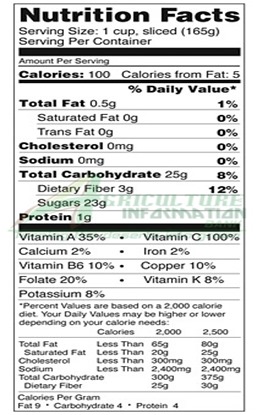

 Mango is a tropical seasonal fruit, which saw its origin in the sub-Himalayan plains of India. There are different types and varieties of mango available in the market today. There are extremely juicy variants of mangoes available. Some mangoes have a small seed while some retain a big one. It is better to opt for those which are more fleshy, sweet and juicy to avail of maximum flavor. Alfonso is one of the breeds of mangoes, which is immensely popular, amongst people of all countries.
Mango is considered to be the king of fruits. It is widely popular in different corners of the world. Its unique flavor manages to turn on, even a non-fruit consumer. It also serves as a perfect beverage if blended with milk and sugar. The prepared beverage is also often termed as a mango smoothie or a mango-shake. It has a unique color and fragrance, which always manages to capture the attention of fruit lovers. Mango stands tall amongst the list of new functional foods known as ‘super fruits’. Along with providing a delicious and delectable taste, numerous health benefits are also offered by the king of fruits. Numerous mango nutrition facts are there, which should be first understood, before digging in to devour the delightful fruit.
Mango is considered to be one of the most nutritious food items. Numerous health benefits are offered by mangoes. Let us vide at some of the important mango nutrition facts which are there. Mangoes are rich in pre-biotic dietary fiber. They are also rich in vitamins and minerals which are essential in strengthening body parts. They are also helpful in maintaining a healthy body. Poly-phenolic flavonoid antioxidant compounds are present in mangoes which help in expelling harmful toxins from the body. Such compounds also help in fighting various diseases. The antioxidant compounds present in mango offer excellent protection against breast and colon cancers.
Other mango nutrition facts boast of a mango’s high vitamin quotient. Mangoes are an excellent source of Vitamin-A. Deficiency of Vitamin-A might cause night blindness. It is very important to increase the intake of mangoes in one’s diet to get rid of eye related problems. Mangoes are also rich in potassium which helps in controlling the heart rate and blood pressure. Another fact that could be placed in the list of mango nutrition facts is that, a mango poses as an excellent source of beta-carotene and alpha-carotene and beta-cryptoxanthin, all of which retain antioxidant properties and are considered essential for vision. Such compounds are also necessary for the maintenance of healthy mucus membranes and skin. Vitamin-C and E are also available, which are necessary for creating resistance against infectious agents and harmful radicals. Mangoes are also ingested in their raw form in many countries. The raw form of a mango offers a unique sour taste, which is turned delicious by the addition of condiments and spices, in various places. Ingesting beverages made of raw mangoes, helps a person to avoid getting hit with sun strokes.
Health benefits of Mangoes
- Mango fruit is rich in pre-biotic dietary fiber, vitamins, minerals, and poly-phenolic flavonoid antioxidant compounds.
- According to new research study, mango fruit has been found to protect against colon, breast, leukemia and prostate cancers. Several trial studies suggest that polyphenolic anti-oxidant compounds in mango are known to offer protection against breast and colon cancers.
- Mango fruit is an excellent source of Vitamin-A and flavonoids like beta-carotene, alpha-carotene, and beta-cryptoxanthin. 100 g of fresh fruit provides 765 mg or 25% of recommended daily levels of vitamin A. Together; these compounds are known to have antioxidant properties and are essential for vision. Vitamin A is also required for maintaining healthy mucus membranes and skin. Consumption of natural fruits rich in carotenes is known to protect the body from lung and oral cavity cancers.
- Fresh mango is a good source of potassium. 100 g fruit provides 156 mg of potassium while just 2 mg of sodium. Potassium is an important component of cell and body fluids that helps controlling heart rate and blood pressure.
- It is also a very good source of vitamin-B6 (pyridoxine), vitamin-C and vitamin-E. Consumption of foods rich in vitamin C helps the body develop resistance against infectious agents and scavenge harmful oxygen-free radicals. Vitamin B-6 or pyridoxine is required for GABA hormone production within the brain. It also controls homocystiene levels within the blood, which may otherwise be harmful to blood vessels resulting in CAD and stroke.
- Further, it composes moderate amounts of copper. Copper is a co-factor for many vital enzymes, including cytochrome c-oxidase and superoxide dismutase (other minerals function as co-factors for this enzyme are manganese and zinc). Copper is also required for the production of red blood cells.
- Additionally, mango peel is also rich in phytonutrients, such as the pigment antioxidants like carotenoids and polyphenols.
Did You Know?
One cup of mangos is just 100 calories, so it’s a sweet treat that won’t weigh you down.
Each serving of mango is fat free, sodium free and cholesterol free.
Mangos contain over 20 different vitamins and minerals.

Go bananas with banana nutrition facts
Banana saw its origin in Malaysia. The fruit is believed to be conceived for the first time in the country. It made its way to the Indian subcontinent with the help of numerous visitors. It took several years to become popular all across the world. Today, banana stands as one of the most loved fruits. Its sweet flavor is considered to be one of the best flavors offered by any fruit. In many countries, leaves of banana are used in the making of plates. Bananas are easy to peel as well. They are immensely fleshy in the inside. This makes it easily consumable. Apart from its delectable taste, there are numerous health benefits of bananas too, which have been listed here as banana nutrition facts.
 The deliciously sweet fruit is loved by people of all age groups. Bananas act as a perfect smoothie material too. They blend in with other fruits easily and enhance their flavor. If bananas are prepared without addition of another fruit, the prepared beverage is known as a banana smoothie or a banana-shake. This is generally prepared by adding milk or yoghurt with the mixture. Numerous banana dishes are also widely popular amongst the masses. Banana splits are loved by children. Banana is also used in the preparation of pies and cakes. So, why do people consume bananas and go bananas at the sight of bananas? The answer to that is, naturally, its delectable taste. However, there are several banana nutrition facts too that bears testimony to their popularity.
Banana nutrition facts expound the presence of several essential elements and constituents in the fruit. Banana retains Vitamin C which helps in defending the body against diseases like scurvy. It also helps in improving the immune system of the body thereby helping the body to develop resistance against infectious agents. The vitamin is also essential for the synthesis of connective tissues. It also assists in the absorption of iron, thereby helping in the formation of blood. Banana also contains potassium which helps in speeding up the process of protein synthesis. Potassium is also beneficial in muscle-building. Potassium assists in the stimulation of nerve impulses, which are necessary for muscle contraction. Hypertension and stroke could also be eschewed, with the aid of potassium in bananas. Bananas also do not retain sodium hence could be easily included in one’s diet to mitigate the effect of high blood pressure.
Some of the banana nutrition facts explain, how bananas impart a boost in the energy level of a person. No wonder players and athletes prefer munching a piece of banana to improve their performance. Bananas contain sugars like fructose, sucrose and glucose which are available naturally. It also contains fiber. It retains Vitamin B6, which is also known as pyridoxine. It helps in the synthesis of antibodies, thereby improving the immune system. Pyridoxine also helps in the formation of red blood cells. One of the
banana nutrition facts elucidates how bananas contain extremely digestible carbohydrates. A banana also assists in carrying out various metabolic activities in the body.
Source: Mango Nutrition Fact
Nutrients availability at different pH value
The pH value measures the ratio of H+ ions to OH-base ions in the soil. If the soil solution has more H+, the soil is acidic. If the OH-dominates, the soil is alkaline. The equal balance between them is neutral and its value 7.0. The soil pH value interacts with the mineral nutrients. Availability is determined by the soil pH and varies for each nutrient. High or low pH causes toxicity and decreases microbiological life in the soil.

Sodium raises pH and destroys soil structure. High pH makes elements such iron zinc and manganese less soluble. Low pH leads to continuous acidification in the soil. Acidification can be the result of the excessive use of fertiliser, or it can also occur naturally. For example, a mass of vegetation in a warm and moist condition during decomposition produces high quantities of carbon dioxide. In another instance, acidic cations in large amounts replace the natural nutrients and cause acidity in the soil. Strong and extremely acidic soils are deficient in calcium and magnesium. Alkaline and strong alkaline soils contain high levels of free limes. Extremely alkaline soils are usually sodic soils. The positively charged sodium ions attract the negatively charged soil particles. The soil particles move close to each other, which creates a soil compaction. As a result, the water infiltration into the soil is slow and organic matter dissolution is possible. Root penetration is also extremely difficult.
Vegetables nutrient requirement for specific yields
Plant Nutrition is the study of the chemical elements and compounds
that are necessary for plant growth, and also of their external supply
and internal metabolism. In 1972, E. Epstein defined two criteria for an
element to be essential for plant growth:
- In its absence the plant is unable to complete a normal life cycle; or
- That the element is part of some essential plant constituent or metabolite.
This is in accordance with Liebig's law of the minimum.
There are 17 essential plant nutrients. Carbon and oxygen are absorbed
from the air, while other nutrients including water are obtained from
the soil. Plants must obtain the following mineral nutrients from the
growing media:
- The primary macronutrients: nitrogen (N), phosphorus (P), potassium (K)
- The three secondary macronutrients: calcium (Ca), sulphur (S), magnesium (Mg)
- The macronutrient Silicon (Si)
- The micronutrients/trace minerals: boron (B), chlorine (Cl), manganese (Mn), iron (Fe), zinc (Zn), copper (Cu), molybdenum (Mo), nickel (Ni), selenium (Se), and sodium (Na)
- Nutrients are moved inside a plant to where they are most needed. For example, a plant will try to supply more nutrients to its younger leaves than its older ones. So when nutrients are mobile, the lack of nutrients is first visible on older leaves. However, not all nutrients are equally mobile. When a less mobile nutrient is lacking, the younger leaves suffer because the nutrient does not move up to them but stays lower in the older leaves. Nitrogen, phosphorus, and potassium are mobile nutrients, while the others have varying degrees of mobility. This phenomenon is helpful in determining what nutrients a plant may be lacking.

Upping your nutrition quota
If aesthetics aren’t a good enough reason to grow herbs, consider the fact that many herbs are good for you, too. According  to the U.S. Department of Agriculture (USDA), a teaspoon of dill seed contains 32 milligrams of calcium; a teaspoon of ground basil contains 6 milligrams of magnesium. But when it comes to nutrients, the herbal champ is the chili pepper: One tea-spoon of chili powder contains potassium, sodium, ascorbic acid (vitamin C), niacin, and vitamin A. (However, if you decide to substitute chili powder for your multivitamin, we recommend taking each teaspoon with a gallon of milk to offset the heat of the chili.)
A few culinary herbs have recently made the news because of their antioxidant levels. Antioxidantsare chemicals contained in plants that are thought to play a role in preventing some forms of cancer, as well as in helping to slow the aging process. In one study researchers tested the antioxidant levels of a variety of herbs and found the highest levels in oregano, sage, peppermint, and thyme. They concluded that herbs are an important source of dietary antioxidants, right up there with red wine and green tea.
 to the U.S. Department of Agriculture (USDA), a teaspoon of dill seed contains 32 milligrams of calcium; a teaspoon of ground basil contains 6 milligrams of magnesium. But when it comes to nutrients, the herbal champ is the chili pepper: One tea-spoon of chili powder contains potassium, sodium, ascorbic acid (vitamin C), niacin, and vitamin A. (However, if you decide to substitute chili powder for your multivitamin, we recommend taking each teaspoon with a gallon of milk to offset the heat of the chili.)
A few culinary herbs have recently made the news because of their antioxidant levels. Antioxidantsare chemicals contained in plants that are thought to play a role in preventing some forms of cancer, as well as in helping to slow the aging process. In one study researchers tested the antioxidant levels of a variety of herbs and found the highest levels in oregano, sage, peppermint, and thyme. They concluded that herbs are an important source of dietary antioxidants, right up there with red wine and green tea.
Cherry Nutrition Facts
A bowl full of sweet cherries is brimming with health benefits. Cherries are naturally low in fat and calories and free of both cholesterol and sodium. They are also a good source of dietary fiber, vitamin C, potassium and contain boron.

Facts
- The word 'cherry' comes from the French word ‘cerise,’ which in turn comes from the Latin words cerasum and Cerasus, the classical name of the modern city Giresun in Turkey.
- It is believed that the sweet cherry originated in the area between the Black and Caspian Seas in Asia Minor around 70 B.C. The Romans introduced them to Britain in the first century A.D.
- Cherries are drupes, or stone fruits, and are related to plums, peaches and nectarines.
- There are 430 species in the genus Prunus which include cherries, plums, peaches, apricots and almonds - just to name a few.
- The English colonists brought cherries to North America in the 1600’s.
- There are more than 1,000 varieties of cherries in the United States, but fewer than 10 are produced commercially.
- On average, there are about 44 cherries in one pound.
- In an average crop year, a sweet cherry tree will produce 800 cherries.
- Seventy percent of the cherries produced in the United States are grown in the Northwest.
- Stemilt Growers is the world’s largest shipper of sweet cherries.
- While they have long been a popular dessert fruit, cherries were used for their medicinal purposes in the 15th and 16th centuries.
- Researchers first found that eating cherries may help relieve gout and arthritis attacks back in 1950 during a preliminary study of daily cherry consumption.
- Anthocyanids give cherries their red color.
- The world's heaviest cherry was grown by Gerardo Maggipinto (Italy) and weighed 21.69 g (0.76 oz) on June 21, 2003. The cherry was presented at La Grande Ciliegia, in Sammichele di Bari, Italy.

Fiber: One cup of cherries contains 3 grams of dietary fiber, an essential ingredient in a healthy diet. Adults should consume between 20 and 30 grams of fiber each day. Research suggests that a high-fiber diet can prevent constipation, lower the risk for developing digestive disorders, lower cholesterol, control blood sugar and aid in weight loss.
Potassium: Cherries are a good source of the nutrient potassium, with approximately 260 milligrams in a one cup serving. The recommended daily dose of potassium for adults is 3,400 milligrams. Potassium is a main electrolyte that keeps the body functioning properly and plays an important role in muscle, heart, kidney and nerve cell functions. It also works with another electrolyte, sodium, to balance water levels throughout the body.
Vitamin C: One serving of cherries has 16% of the recommended daily dose of vitamin C, a water-soluble vitamin that is essential to keep the body functioning normally and maintain a healthy immune system. Vitamin C is also a highly effective antioxidant, which means it may help prevent the onset of several chronic diseases.
Boron: Cherries also contain boron, a mineral that helps maintain calcium balance and promotes bone health. Some research suggests that boron may play a role in preventing osteoporosis, a disease in which bones become fragile and more likely to break. The level of boron needed in the diet is not known, but many nutritionists suggest consuming between 3 and 5 milligrams of boron each day. In addition to sweet cherries, boron is found in many other common fruits, leafy vegetables and legumes.
Cherry Nutrition Facts
Cherries are certainly one of today’s most popular dessert fruits, but they have been recognized for their medicinal purposes since the 1400’s. One cup of sweet cherries has just 90 calories and is a good source of fiber and vitamin C. With these great attributes, it’s no wonder why many nutritionists, dietitians, and other health professionals often refer to cherries as a superfood. Read on to learn about the many “super-powers” of cherries:
 Cherries and Antioxidants:
Did you know that cherries rank among the top 20 foods with the highest concentration of antioxidants. In fact, the standard one-cup serving of cherries has the capacity to carry 4,873 antioxidants! Antioxidants are substances found in foods that may protect cells from damage caused by unstable molecules, known as free radicals. Cherries are especially rich in a phytochemical called anthocyanin. They also contain melatonin, phenols and quercetin.
Cherries and Melatonin:
There are many instances in life when your sleep patterns are disrupted. Whether it is expected jet lag or an ongoing sleep disorder, fresh cherries and the melatonin they contain can be an ally for you! Melatonin is a naturally occurring hormone produced by the pineal gland in the brain. It plays a key role in regulating the body’s internal clock and helps determine when we fall asleep and when we wake up. Eating a handful of cherries just before bed is a great way to naturally regulate your sleep cycle.
 Cherries, Arthritis and Pain Relief:
Great news for arthritis sufferers! A bowl full of cherries may help alleviate pain and inflammation associated with arthritis and gout, the most severe form of arthritis. A gout attack occurs when excessive amounts of uric acid (waste product found in the blood) accumulate in the joints, and cause inflammation and pain.
Back in 2004, researchers from the Agriculture Research Service and University of California-Davis teamed up to study the effects consuming cherries could have on reducing pains caused by gout. They found that participants who ate 45 sweet cherries during breakfast significantly decreased their blood plasma levels while simultaneously increasing the amount of uric acid removed through urine. According to the researchers, these two changes are signs of a healthy immune system fighting inflammation.
 Cherries and Heart Health:
Cardiovascular disease, or heart disease, is the single leading cause of death in America. One of the many health benefits of cherries is that they contain powerful antioxidants called anthocyanins, which may reduce a person’s risk of developing cardiovascular disease.
Just like red wine, anthocyanins give cherries their deep red color and also protect cells from damage during an interaction with oxygen. This important process also serves to protect the heart and surrounding tissue, inhibit plaque formation and reduce inflammation.
Cherries and Brain Health:
Cherries are one of the few foods that contain melatonin. In addition to helping regulate sleep patterns, melatonin is an important antioxidant that helps maintain optimum brain functioning and may deter the onset of age-related chronic diseases like Alzheimer’s. Research also suggests that the anthocyanins found in cherries further protect neural cells and promote brain health.
Source: stemilt.com
Compost Tea Basics


